






Research guide · 60-second read
How to Read a Peptide COA(Certificate of Analysis)
Six checks, one real lab report, and our live lot data. Know in a minute whether a COA proves anything.
- Lot reports
- 11
- HPLC purity, every lot
- >99%
- Within ±10% of label
- 11/11
The six checks, in order
- 01Lot matchCOA batch number = the one on your vial.
- 02Who tested itNamed lab, report number, analysis date.
- 03IdentityLC-MS mass matches the compound.
- 04PurityHPLC result next to its spec.
- 05Net contentMeasured mg vs label, inside the range.
- 06Gaps“No data” means not tested.
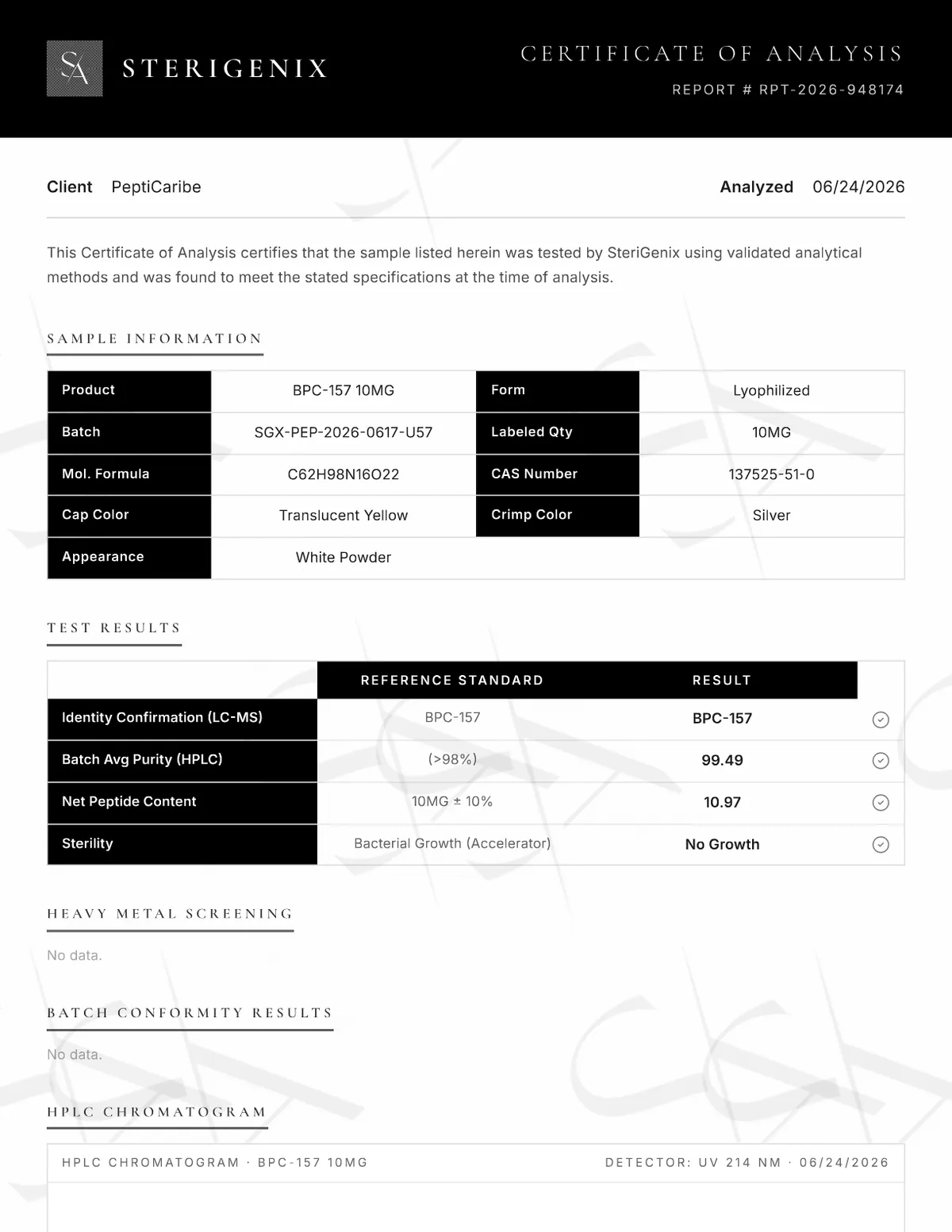
Anatomy of a real COA
One of our own lot reports, exactly as the lab issued it. Tap a number.
Purity and net content are different numbers
HPLC purity is a ratio
Of everything the detector saw, the share that is the target peptide. It says the material is mostly the right compound, not how much is in the vial.
Net content is an amount
Milligrams measured against the label and its allowed range. A vial can be very pure and still under-filled, so a useful COA reports both.
Identity comes first. LC-MS (liquid chromatography–mass spectrometry) checks that the main peak has the molecular mass of the compound on the label. Purity and content only matter once identity is confirmed.
Net content checker
Type any COA's numbers, or pick one of our lots: difference from label, inside or outside the report's spec, and the purity × content estimate.
Arithmetic only, from the numbers on the report. It doesn't replace the lab's method or uncertainty, and it doesn't say anything about use.
Our current lots, live
HPLC purity 99.19–99.94% · 11 of 11 within ±10% of label · every number from the PDF on its card. Full library on the COA page.
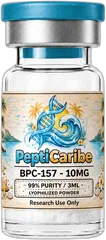
- BPC-157 10 mgSGX-PEP-2026-0617-U57
- HPLC
- 99.49%
- Δ label
- +9.7%
- BPC-157 + TB-500 10 mgSGX-PEP-2026-0617-P99
- HPLC
- 99.67%
- Δ label
- +2.0%
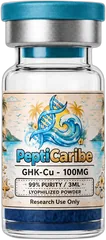
- GHK-Cu 100 mgSGX-PEP-2026-0617-Q94
- HPLC
- 99.61%
- Δ label
- +5.0%
- GHK-Cu 50 mgSGX-PEP-2026-0617-B65
- HPLC
- 99.44%
- Δ label
- +4.0%
- MOTS-c 10 mgSGX-PEP-2026-0617-M75
- HPLC
- 99.59%
- Δ label
- +8.5%
- CJC-1295 + Ipamorelin 10 mgSGX-PEP-2026-0617-S64
- HPLC
- 99.54%
- Δ label
- −1.1%
- SS-31 10 mgSGX-PEP-2026-0617-K16
- HPLC
- 99.19%
- Δ label
- −0.7%
- KPV 10 mgSGX-PEP-2026-0617-Y56
- HPLC
- 99.94%
- Δ label
- +7.7%
- NAD+ 500 mgSGX-PEP-2026-0617-X81
- HPLC
- 99.79%
- Δ label
- +2.0%
- Glutathione 1,500 mgSGX-PEP-2026-0617-T18
- HPLC
- 99.51%
- Δ label
- +2.2%
- 5-Amino-1MQ 50 mgSGX-PEP-2026-0617-C56
- HPLC
- 99.89%
- Δ label
- +8.4%
Tested 2026-06-24 · Lab named on these reports: SteriGenix Analytical. Blends use the total.
Red flags on any COA
- No lot number, or it doesn't match the vial
- No lab name, report number or date
- Purity with no method or chromatogram
- Purity but no identity test
- Out-of-spec result marked as a pass
- One report reused across lots or sizes
- A screenshot instead of the lab's document
How to verify a COA
Contact the lab named on the report and quote the report number and lot. A lab can confirm whether it issued that report for that sample. Ask the supplier for the lot on your vial before you buy. For ours, the PDFs are above and on the COA page; for anything else, contact us.
Common questions
What purity is good for a research peptide?
Read the result against the spec on the same report. Our current reports use a spec of above 98% by HPLC. A higher number only means something if identity was confirmed and the method is shown.
Why is the measured amount higher than the label?
Fill weights carry a tolerance, and labs report what they measured. The spec line (for example 10 mg ± 10%) gives the allowed range; anything inside it meets the report's spec.
Does a COA say how to use a compound?
No. A COA documents identity, purity and content of one lot for laboratory research. See our Research Use Only policy and disclaimer.