
Research peptide data sheet
GlutathioneResearch peptide · identity, purity & COA
Glutathione is a tripeptide of glutamate, cysteine and glycine in which glutamate is linked through its side-chain (γ) carboxyl group, used in in-vitro redox and cell-culture research. Below: its identity data and the numbers from our current lot's certificate of analysis.
- HPLC purity
- 99.51%
- Net content vs label
- +2.2%
- Identity (LC-MS)
- Confirmed
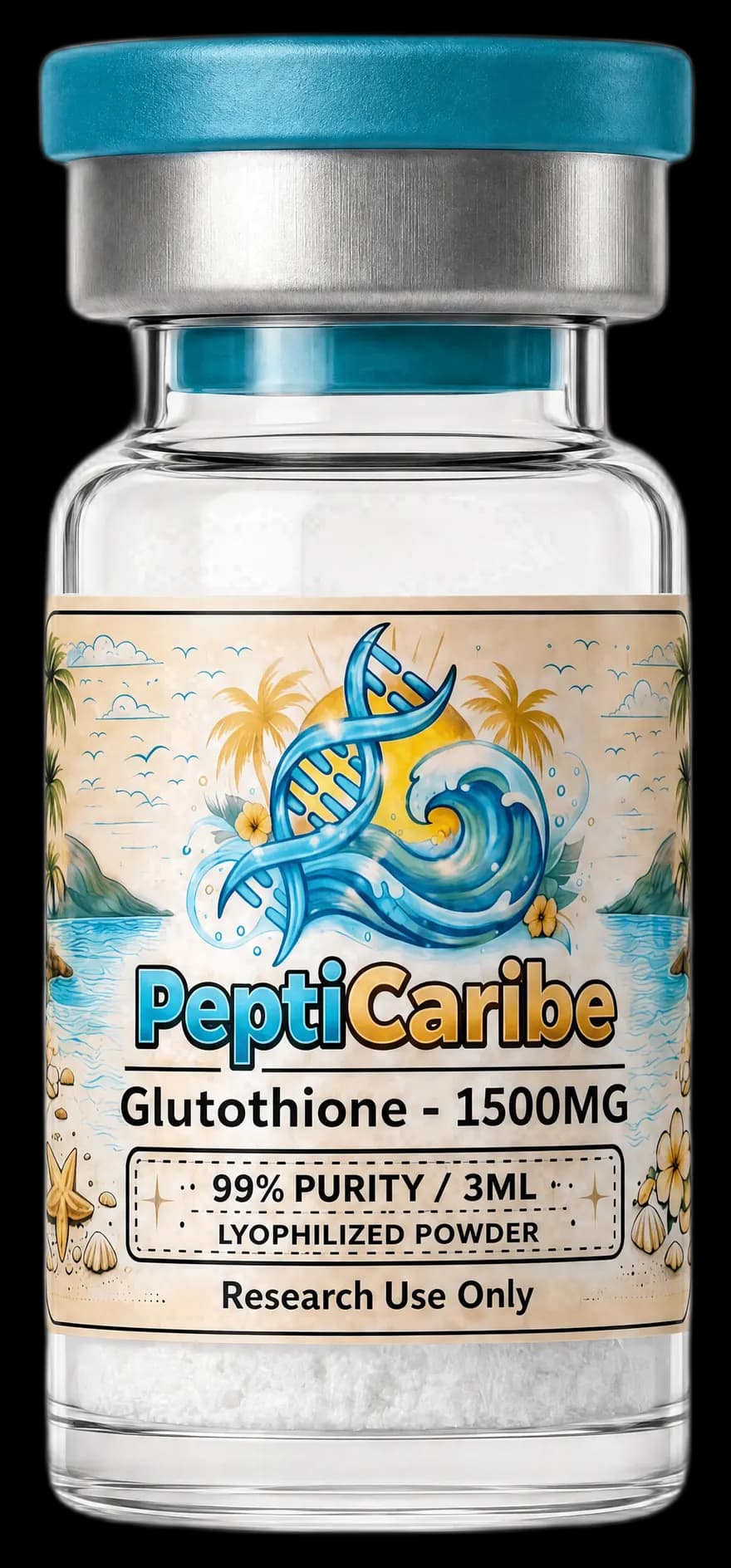
Glutathione identity data
- Type
- Tripeptide (γ-glutamyl)
- Sequence
- γ-Glu – Cys – Gly
- Molecular formula
- C10H17N3O6S
- Molecular weight
- 307.32 g/mol
- CAS number
- 70-18-8
- Form
- Lyophilized
- Appearance
- White powder (amber vial)
Formula, CAS number, form and appearance as printed on the lot's COA; molecular weight calculated from that formula. Reduced form (free thiol); γ-peptide bond between Glu and Cys.
Current lot: SGX-PEP-2026-0617-T18
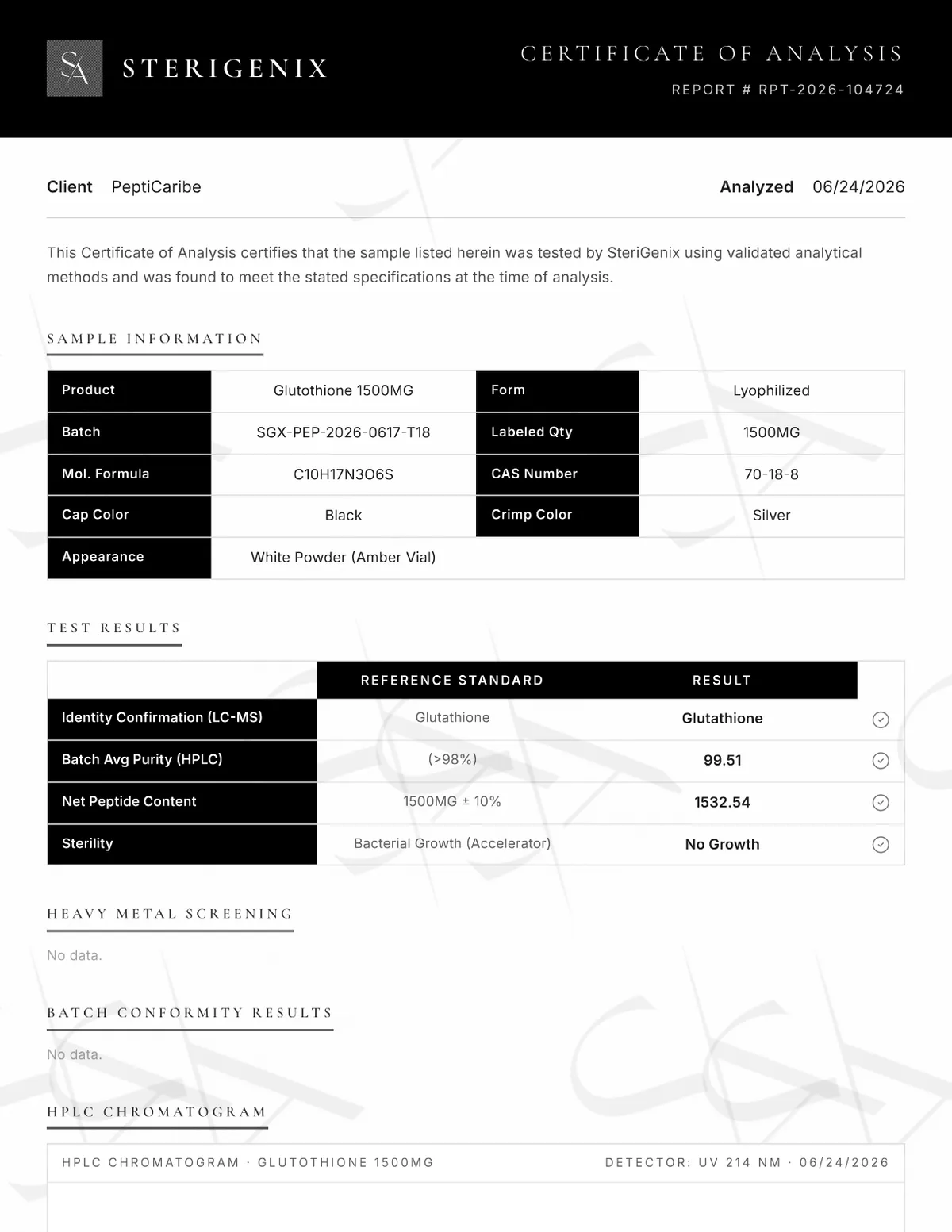
HPLC purity 99.51%
Spec on the report: above 98%. LC-MS identity confirmed against the Glutathione reference standard.
Net content 1,532.54 mg measured vs 1,500 mg label (+2.2%), inside the 1,500 mg ± 10% spec.
- Lab
- SteriGenix Analytical
- Analyzed
- June 24, 2026
- Report
- RPT-2026-104724
- Sterility
- No growth
Verify it yourself: the report lists the lab's verification page, sterigenixanalytical.com/verify. Enter access code SGX-PEP-2026-0617-T18 (the lot number on your vial).
Laboratory storage
- Long termKeep the sealed lyophilized powder at −20 °C.
- Short term2–8 °C (refrigerated) for brief periods; avoid repeated freezing and thawing.
- Protect itAway from light and moisture; let the vial reach room temperature before opening.
Questions about Glutathione
Is glutathione a peptide?
Yes, a tripeptide, but an unusual one: glutamate joins cysteine through its side-chain carboxyl (a γ-bond) rather than the usual backbone bond. The cysteine's free thiol is what makes it the reduced form.
What does the current lot's COA show?
LC-MS identity confirmed against the glutathione reference standard, HPLC purity above the report's 98% spec, and net content inside the 1500 mg ± 10% range. The exact numbers are in the lot panel above and in the PDF.
How do I read this COA?
Start with the lot number, then identity (LC-MS), purity (HPLC) and net content against their specs. Our step-by-step COA guide walks through a real report line by line.